Over the past couple of days, I have been reviewing a series of Materials Science papers, all co-authored by the same group of researchers from the Universities of Lahore, Chakwal, and Sargodha in Pakistan. While reviewing them, one analytical technique kept standing out for unusual reasons.
Continue reading “UnEDXpected Peaks”Category: Large problematic paper sets

Problems in Harvard Medical School studies include images taken from other researchers’ papers and vendor websites

Over the last week I’ve been analyzing a set of papers from a research group at Brigham and Women’s Hospital, which falls under the Harvard Medical School. The papers have the usual image problems we unfortunately encounter so often, such as duplicated photos of mice and overlapping Western blots.
But this set also includes a 2022 paper that appears to have copied/pasted several figure panels from other researchers and even from scientific vendors. Most of these problems were found with ImageTwin or reverse image searches.
Quick links [the spreadsheet and slide have been updated with an additional problem found on Feb 2, 2024]:
- spreadsheet with the
2829 papers found with PubPeer links [Excel file] - slide deck with the
5859 image problems found in the2829 papers [PDF].

See: https://pubpeer.com/publications/FF5706E8826CB8D45481E942A679EE
Share this:

Hindawi’s mass retraction of “Special Issues” papers
Hindawi — and its parent company, Wiley — have recently announced that they will retract hundreds of papers from journals targeted by paper mills. The papers were all published in ‘special issues’, with the guest editors being either asleep at the wheel or perhaps knowingly looking the other way.
In this blog post, I will take an in-depth look at some of these papers.

Share this:

Concerns about 12 MD Anderson Cancer Center’s Pathology Papers

As I was doing a reverse-image search online on a set of papers, I saw an unrelated photo of a skin biopsy that appeared to contain repetitive areas. Even in the small Google Image Search thumbnail it was clear to me that something unexpected was going on in this image.
The discovery led me to a set of 12 papers from a research group at the Hematopathology Department of the Texas MD Anderson Cancer Center, all with histopathology photos showing unexpected repetitive structures.

Share this:

Problematic Papers from Zhejiang University
This post describes a set of over 20 papers with mostly image problems from the Department of Pharmacology at the School of Medicine of Zhejiang University in Hangzhou, China. All papers have Professor Ximei Wu as the common – and often corresponding – author. The Wu lab conducts research on stem cell and bone development, and their papers contain many images of Western blots and immunohistochemistry experiments.
Continue reading “Problematic Papers from Zhejiang University”Share this:

Citation Statistics and Citation Rings
Citations lend credibility to a scientific paper. And sometimes even result in a cash bonus. But while most researchers just hope their paper will be cited by others, some authors have found more ‘creative’ ways of getting their papers noticed. A recent comment on PubPeer offers a glimpse behind the scenes.
Continue reading “Citation Statistics and Citation Rings”Share this:

No misconduct found in the VSELs papers
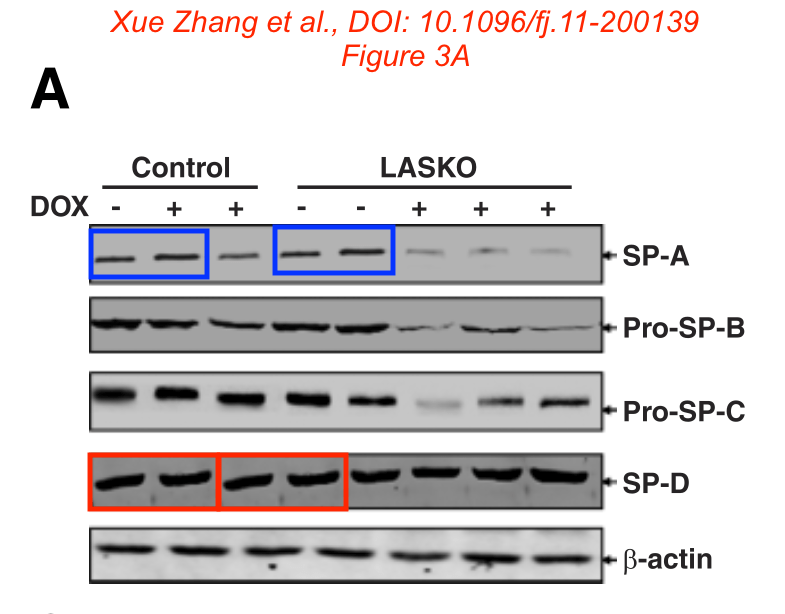
In November 2020 I wrote about a set of 28 papers published by Mariusz Ratajczak, a professor at the University of Louisville who works on VSELs, very small embryonic-like stem cells.
Most of these papers included reused images, presented as new experiments without proper citation, while some others appeared to show overlapping photos or duplicated elements within the same photo. You can read my 2020 blog post here.
I shared my concerns about these papers with the university in February 2019.
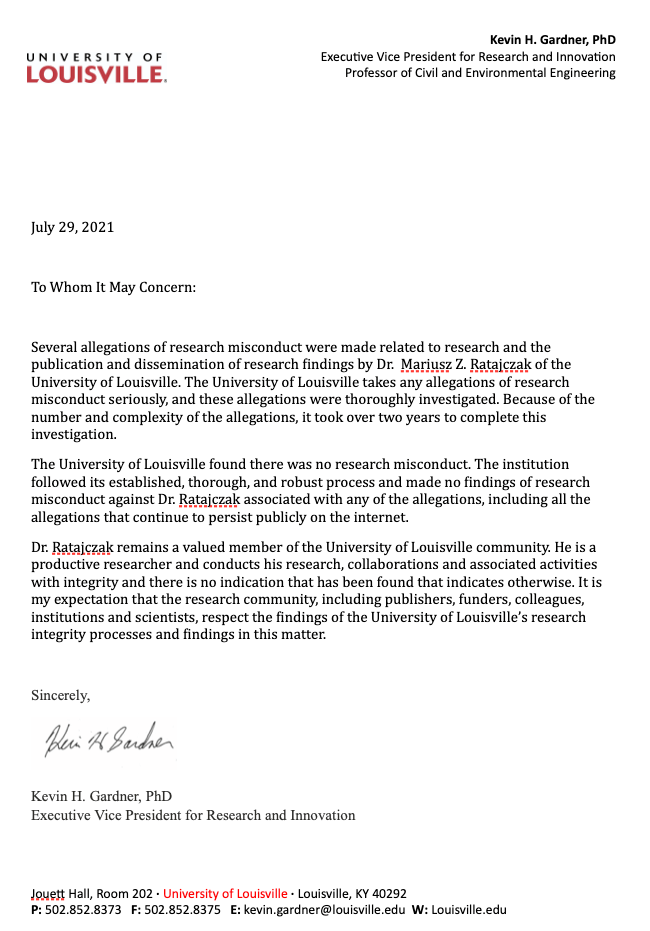
Today -March 23, 2022 – the University of Louisville sent their final decision to me, and I am sharing this here with their permission.
“The University of Louisville found there was no research misconduct. The institution followed its established, thorough, and robust process and made no findings of research misconduct against Dr. Ratajczak associated with any of the allegations, including all the allegations that continue to persist publicly on the internet. ”
Share this:

New Mendel University Rector found guilty of misconduct
In October 2020 and 2021 I reported a total of 21 papers published by Professor Vojtěch Adam that contained image problems. Vojtěch Adam is a professor in chemistry, and head of the Department of Chemistry and Biochemistry, at Mendel University in Brno, Czech Republic. He is a top Czech researcher in cancer and nanotechnology.
Today, a day before his appointment as the new Rector (Dean) of Mendel University, a committee released a report of their findings from an investigation into twelve of these papers. Their conclusions came as a big surprise.
Continue reading “New Mendel University Rector found guilty of misconduct”Share this:

Concerns about Marseille’s IHUMI/AMU papers – Part 3

This is Part 3 of a series describing papers from the Institut Hospitalo-Universitaire Méditerranée-Infection (IHUMI or IHU) and Aix-Marseille Université (AMU) — institutions in Marseille, France — with potential problems.
In Part 1, I listed papers with image concerns. In Part 2, I focused on a set of papers describing many different research projects on specimens collected from homeless people — but all run under the same IRB approval number.
In this post, we’ll take a look at IHU/AMU papers describing samples obtained from people in African countries. Many of them lack wording on ethical approval by the local authorities, and all lack authors from these countries. This type of research might fall under the definition of neo-colonial science.

Share this:

Concerns about Marseille’s IHUMI/AMU papers – Part 2
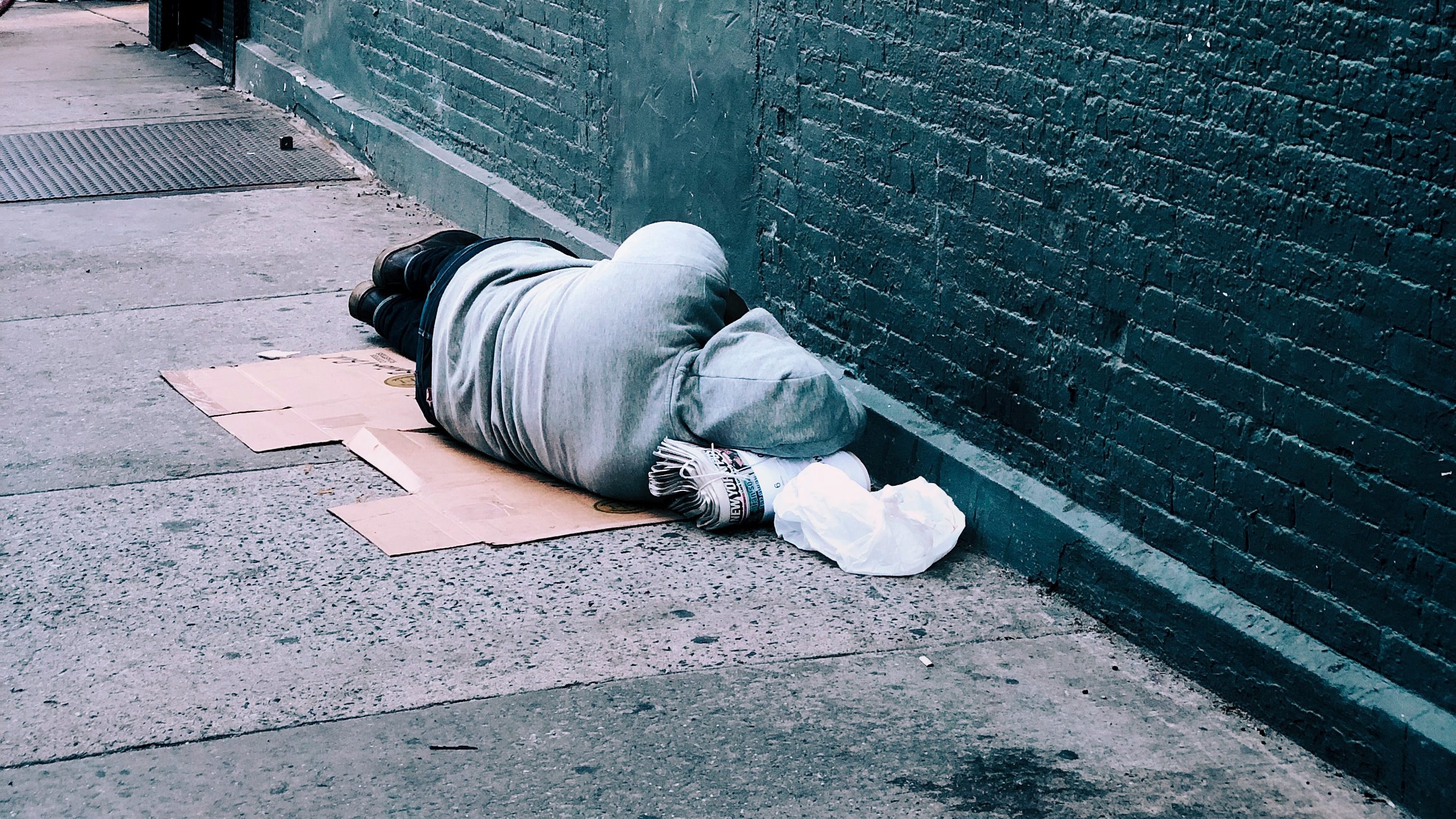
This is part 2 of a series describing papers from the IHUMI/AMU institutions in Marseille, France, with potential problems. In Part 1, I listed papers with image concerns. In this follow-up I’ll focus on a set of papers that might have problems with human subjects research not having received proper ethical approval. The articles span a decade of research on homeless people in Marseille, and involve different studies and specimens — but all were run under just one IRB approval number.
Jon Tyson @jontyson on Unsplash

 Science Integrity Digest